Monday, June 22, 2009

"the arm bone's connected to the ankle bone..."

What?

Kick Your Shoes Off, Free your Feet, tell your nervous system you care

"There's been a LOT of work in the past 4-5 years about new research in foot ware and care. Guess what? feet work. All by themselves.

Guess what else? shoes stop feet from working. That's a pretty global condemnation but it's true: with a handful of exceptions, modern shoes are based on 200 year old technology (the lasts of shoe design), and for the most part are way way way too restrictive to let our feet do their thing.

It's not just four inch heels or wing tips that are the problem: it's also flip flops and horror of horrors those gorgeous high tech trainers with designs to "correct" supination or too much pronation or heel strike or whatever. And just when you realize that that's as bad as putting the foot into a cast, we find that flip flops and Birkenstocks sandles are equally horrific for other reasons: toes have to claw onto the sandle to keep them on. Despite claims that such "foot muscle work" is good for you, it really isn't. The body doesn't keep our feet in flexion (toes curled) with every step we take when we walk barefoot. Why? Our feet are one of the most jointed parts of our body (after the skull and the hands) and yet daily, what do we do? Lace up shoes to restrict those bones from doing what they were designed to do to support us: MOVE.

THere's a fantastic piece in the New York Magazine from earlier this year that describes most of the latest research and why shoes suck. Recommended reading.

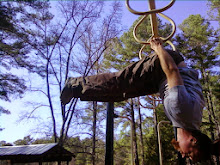
Lots of joints in the foot, huh?

One benefit of freeing the feet this article doesn't touch on is the relation of squished feet to the nervous system. We don't talk about the nervous system much, it's just sorta there, right? But here's the thing: the nervous system, as described by Eric Cobb, is hard wired to check only very few things. One of these, demonstrated in the startle reflex, is not fight or flight, but the very binary Threat or No Threat. "We're geared to optimize for survival, not performance," according to Cobb. Most of the nerves in our bodies designed to detect how we're moving in space are at the joints. Guess what happens in terms of that Threat/No Threat thing if our joints are squished and so not sending happy "we're free and moving" signals back to the rest of the system? Is that going to be interpretted as a Threat or a No Threat?

As Cobb demonstrates in his seminars, because we're totally connected systems, optimized for survival, if we get a message somewhere in our body that says there's a signal interruption, other parts of the body respond - and they respond immediately. In one demo, Cobb did a muscle test on a barefooted athlete to check for hamstring (back of the leg) strength. Rock solid. He then simply grabbed the athlete's foot, holding it snugly as in a laced shoe, and did the muscle test again. It was like those leg muscles got unplugged. Why?

This shut down response is part of the signaling process that says if there's something wrong somewhere, we your nervous system, don't want you exerting effort that could put you at further risk. Attend!

So above and beyond all the amazing stories about how shoes are bad for us biomechanically - because they get in the way of our own vastly superior biomechanics - they're also bad for us neurologically. Squished or non-mobile joints tell our body there's a problem. Every step we take with these immobilized joints sends that message "there's a problem; there's a problem: threat threat threat."

As most of us have experienced, if we don't attend to the quiet signals, our body has a way of sending messages out to get attention. And not necessarily at the site of the problem. Restricted feet lead to knee issues, or a hip issue or back issue, or shoulder ache or a jaw pain or maybe a wrist pain, to name a few hot spots."

This post was taken from 'IamgeekFit' blogger. It struck some cords with me as to what I've been trying to tell folks for a while now. Here's another example--for ladies who wear pointy toed, high heels, what is the first thing you do when you take your shoes off? Take a deep breath right? That's because the feet have been CONFINED.

You go geek fit dude...


Monday, June 8, 2009

and we wonder why big pharma is KING!

King of what you may ask? Read this story about how they fabricated a "peer reviewed" journal, just so their research could be seen in a better light...

Merck Makes Phony Peer-Review Journal

books old white background.jpgIt's a safe guess that somewhere at Merck today someone is going through the meeting minutes of the day that the hair-brained scheme for the Australasian Journal of Bone and Joint Medicine was launched, and that everyone who was in the room is now going to be fired.

The Scientist has reported that, yes, it's true, Merck cooked up a phony, but real sounding, peer reviewed journal and published favorably looking data for its products in them. Merck paid Elsevier to publish such a tome, which neither appears in MEDLINE or has a website, according to The Scientist.

What's wrong with this is so obvious it doesn't have to be argued for. What's sad is that I'm sure many a primary care physician was given literature from Merck that said, "As published in Australasian Journal of Bone and Joint Medicine, Fosamax outperforms all other medications...." Said doctor, or even the average researcher wouldn't know that the journal is bogus. In fact, knowing that the journal is published by Elsevier gives it credibility!

These kinds of endeavors are not possible without help. One of The Scientist's most notable finds is a Australian rheumatologist named Peter Brooks who served on the "honorary advisory board" of this "journal". His take: "I don't think it's fair to say it was totally a marketing journal", apparently on the grounds that it had excerpts from peer-reviewed papers. However, in his entire time on the board he never received a single paper for peer-review, but because he apparently knew the journal did not receive original submissions of research. This didn't seem to bother him one bit. Such "throwaways" of non-peer reviewed publications and semi-marketing materials are commonplace in medicine. But wouldn't that seem odd for an academic journal? Apparently not. Moreover, Peter Brooks had a pretty lax sense of academic ethics any way: he admitted to having his name put on a "advertorial" for pharma within the last ten years, says The Scientist. An "advertorial"? Again, language unfamiliar to us in the academic publishing world, but apparently quite familiar to the pharmaceutical publishing scene.

It is this attitude within companies like Merck and among doctors that allows scandals precisely like this to happen. While the scandals with Merck and Vioxx are particularly egregious, we know they are not isolated incidents. This one is just particularly so. If physicians would not lend their names or pens to these efforts, and publishers would not offer their presses, these publications could not exist. What doctors would have as available data would be peer-reviewed research and what pharmaceutical companies produce from their marketing departments--actual advertisements.

Summer Johnson, PhD


So, who are the drug companies working for? YOUR health, or THEIR wallets? You decide.

Tuesday, June 2, 2009

Choose your own path

"If the Great Spirit had desired me to be a white man he would have made me so in the first place. He put in your heart certain wishes and plans, and in my heart he put other and different desires. It is not necessary for eagles to be crows."


From a wise man, a respected man, a courageous man...Sitting Bull.

Is it necessary to follow one certain training style before another? Is it necessary to follow others' trends and never think for oneself? Is it necessary to go blindly, without hesitation, to follow the quick and easy way?

Find the desires that are in your heart. And apply it in a way that helps people better themselves. Whether it's your career, or hobby.
Choose your path.

Monday, June 1, 2009

Mind-body (are they connected and how?)

Dr. John Sarno.
Ever heard of him? Probably not. The medical community has neglected his work for years. Maybe it's time to look at him and his work, and put it to good use. Much like with food, his research comes from the years before the 50's, when the mind-body connection finally came to its disconnection point of no return...until now. The video is over 25 minutes long, but take a look, it's well worth it.

Video

Watch this interview, and know that "denial of the syndrome is part of the syndrome..."

Thursday, May 28, 2009

A little activity goes a long way!


For those who have seen "Last of the Mohicans," you will recognize these pictures right away. Those of you who have not seen it, rent it, and come to Hickory Nut Gorge, Chimney Rock, and the Broad River. A breathtaking site that offers plenty of activity. Hiking, cycling, paddling, rock hopping...a little 'evolutionary' fitness along with a cold beverage at the end of the day does a body good! (No matter how you choose to consume calories...paleo, Mediterranean, North Carolinian...)

Have fun, eat well, and PLAY!

Wednesday, May 13, 2009

trial and error

I've always told my clients, and those who seek nutritional advice, to try one thing, but try it for more than a couple of months. Our bodies have to adapt to what we put it through. Try eating less calories, but try eating less starches first. If after 8 weeks or so, they don't feel better, maybe this doesn't work for them. Here is why...

"Over the past century, numerous studies have addressed this issue of how much more easily some of us fatten than others. One of the most famous was from Vermont State Prison. Endocrinologist Ethan Sims raised convicts food consumption first to 4000 calories a day. Then as much as 7000 per day, while remaining sedentary. There were "marked differences between individuals in ability to gain weight", he reported. Of his 8 subjects that went 200 days on this regimen, two gained weight easily and six did not. Once convict manged to gain less than ten pounds after 30 weeks of forced gluttony. When the experiment ended, all the subjects "lost weight readily, with the same alacrity," in fact, as that with which obese patients typically RETURN to their usual weight after semi-starvation diets. Sims concluded that we're all endowed with the ability to adopt our metabolism "in response to both over- and undernutrition," but some of us, as with any physiological trait, do it better than others."

In another study...
"One of the most telling observations that emerged from these studies of metabolic rate was how greatly it might differ between individuals of equal weight, or similar it might be between those of vastly different weights. In 1915, Francis Benedict studied basal metabolism translated into the minimal amount of energy expended over the course of a day, measured in 89 men and 68 women. There were huge variations. For men who weighed roughly 175 pounds, the minimal expenditure ranged from 1600 to 2100 calories. Implying that one 175 pound man could eat 500 calories a day more that another 175 pound man, and yet would gain no more weight by doing so, even if physical activity were identical. Heavier women also tended to expend more energy, but variations were striking. One of Benedict's female subjects weight 106 pounds, whereas another weighed 176, and yet both had a basal metabolic rate of 1475 calories."


WOW! Talk about varying body types. So one may ask, "why does one diet work for one person, and not for the another?" Above are your answers.

Trial and error.

book learning does a body good.

"The two most comprehensive attempts to deal with the question of cancer in isolated pops were in The Natural History of Cancer, published in 1908, and The Mortality of Cancer Throughout the World, published in 1915. In Fiji, among 120,000 aboriginals, there were only two recorded deaths from malignant tumors. In Borneo, Dr. Pagel had been in practice for 10 years and never saw a case. In the US, the proportional number of cancer deaths rose dramatically--in NY, from 32 per 1000 deaths in 1864, to 67 in 1900. In Phillie, from 31 in 1861, to 70 in 1904.

The absence of malignant cancer in isolated pops prompted the question about why cancer did develop elsewhere. One early hypothesis was that meat-eating was the problem, and that primitive pops were protected from cancer by eating mostly vegetarian diets. But this failed to explain why malignancies were prevalent among the Hindus in India, to whom the "the fleshpot is an abomination," and rare to absent in the Inuit, Masai, and other carnivorous populations. As Isaac Levin wrote in 1910, "this hypothesis hardly holds good in regard to the American Indians, as they consume a great deal of food rich in nitrogen (meat) frequently to excess.""


So, as early, if not earlier, than the early 1900's, folks were trying to figure out what was causing the increase in the number of cancers relating to food consumption. By the late 1920's, Dr. Hoffman, an American statistician who wrote the above mentioned book The Mortality from Cancer Throughout the World, he among others were already attributing some of this to PROCESSED FOODS...

"Overnutrition in general, in conjunction with modern processed foods...foods demanding refrigeration, artificial preservation and coloring, or processing otherwise to an astonishing degree are to blame. Far reaching changes in bodily functioning and metabolism are introduced which, extending over many years, are the causes or conditions predisposing to the development of malignant new growths, and in part at least explain the observed increase in the cancer death rate of practically all civilized and highly urbanized countries."

What a mouthful. And this was in the 20's???? To this day, the governement, and the powers that be, STILL think that food colorings are SAFE, and processed foods in general are SAFE. Who do they think we are?

These passages are from Gary Taubes' book Good Calories Bad Calories. Check it out.

Take a step back. Learn. Move forward. Repeat.